If you’ve ever pulled into a supermarket, retail park, hospital, or shopping centre and wondered can you use a Blue Badge in private car parks, you’re definitely not alone. It’s one of the most common questions people ask, and the confusion is understandable.
Most people know the Blue Badge scheme gives disabled drivers and passengers parking concessions on public roads and council-run spaces. But when it comes to private land, things are often much less clear.
The short answer is yes, you can usually use a Blue Badge in private car parks — but the rules are not always the same as they are on public roads. That’s where many people get caught out.
Whether you rely on your badge every day or only use it when needed, understanding how private parking works can save stress, money, and those frustrating parking charge notices nobody wants landing on the doormat.
What Counts as a Private Car Park?
When asking can you use a Blue Badge in private car parks, it helps to understand what private land actually means.
Private car parks are spaces owned or managed by businesses, organisations, or landowners rather than the local council. Common examples include:
- Supermarkets
- Retail parks
- Hospital car parks
- Shopping centres
- Cinema and leisure parks
- Hotel car parks
- Restaurant parking areas
- Some train station car parks
Even though they are open to the public, they are still privately managed. That means the owner or parking company sets the rules.
So, Can You Use a Blue Badge in Private Car Parks?
Yes, in many cases you can display your Blue Badge and use designated disabled bays. Most private car parks recognise the badge and provide accessible spaces for badge holders.
However, this is the important part: the Blue Badge scheme itself does not legally apply on private land in the same way it does on public roads.
That means a private company can set its own terms and conditions. For example:
- Time limits may still apply
- You may need to enter your registration number inside the building
- You may still need to pay unless free parking is clearly offered
- You may need to display the badge correctly
- Some sites require an additional permit or validation system
So while the answer to can you use a Blue Badge in private car parks is often yes, it does not automatically override private parking rules.
Why So Many People Get Confused
It’s easy to see why drivers assume the same rules apply everywhere. If you use your Blue Badge on council streets, public bays, and local authority car parks, it feels natural to expect the same in a supermarket or retail park.
Unfortunately, private operators don’t always make their signs clear. Small print, poor lighting, confusing machines, or badly placed notices can leave people unsure what they’re meant to do.
Many disabled drivers have had the unpleasant surprise of receiving a parking charge after believing their badge was enough.
That’s why asking can you use a Blue Badge in private car parks is such an important question.
Disabled Bays in Private Car Parks
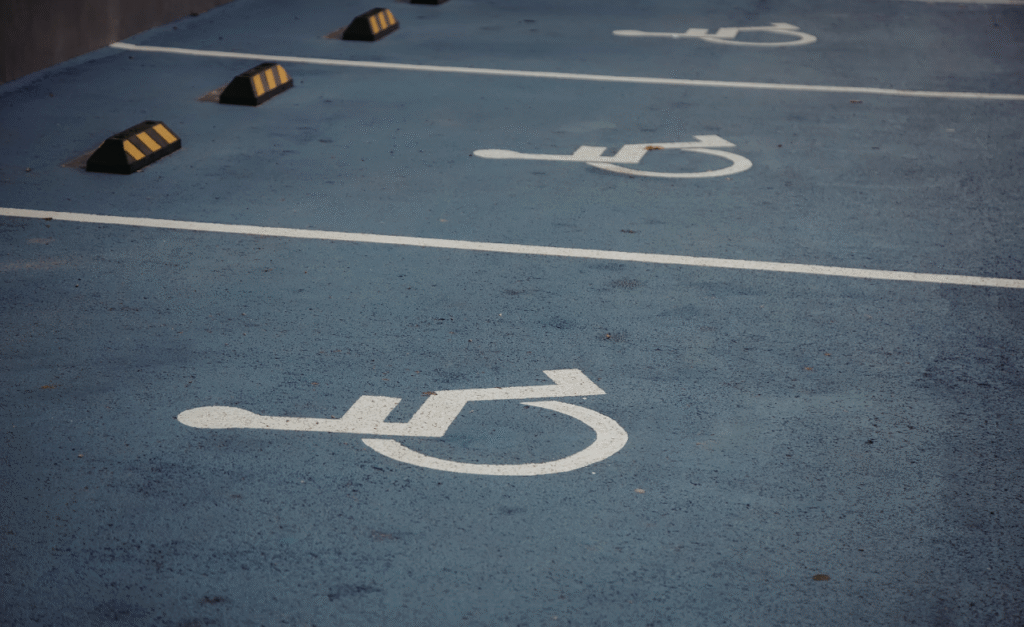
Most private car parks provide disabled bays near entrances. These spaces are wider to allow wheelchair access, mobility aid use, or easier entry and exit.
While many companies ask for a Blue Badge to be displayed, some bays are actually provided under equality and accessibility duties rather than the Blue Badge scheme itself.
In simple terms, the badge is often used as proof of need, but accessibility obligations go beyond the badge alone.
That means some people without a Blue Badge may still require reasonable adjustments depending on circumstances.
What You Should Always Do Before Leaving Your Car
If you’re using private parking, take a minute to check the signs before walking away. It can save a lot of hassle later.
Look for:
- Whether Blue Badge holders park free
- Maximum stay times
- Whether you need to register inside
- Whether badge holders need a ticket
- Any camera enforcement rules
- Contact details if adjustments are needed
Even if you’ve parked there before, rules can change.
Hospitals and Private Parking
Hospital parking deserves a special mention because many NHS sites use private operators.
Some hospitals offer concessions or free parking for disabled visitors and Blue Badge holders. Others require registration at reception or reduced payment rather than full exemption.
If you’re attending an appointment, especially when mobility is difficult, the last thing you need is parking stress. If possible, check the hospital website before travelling.
Again, can you use a Blue Badge in private car parks often depends on the specific site.
What If You Receive a Parking Charge?
This happens more often than people realise.
If you displayed your Blue Badge but still received a charge, don’t panic and don’t ignore it.
Start by:
- Checking the reason for the notice
- Taking photos of your badge and signs
- Keeping receipts or appointment letters
- Appealing promptly
- Explaining any disability-related issues clearly
If the signage was unclear or reasonable adjustments were not considered, that may strengthen your case.
Many notices are challenged successfully when people provide evidence.
A Human Reality Many People Forget
For some people, parking close to an entrance is the difference between being able to go out or staying home.
A few extra metres might not sound much to others, but for someone dealing with pain, fatigue, breathlessness, balance issues, or mobility problems, it can be huge.
That’s why accessible parking spaces matter so much. They aren’t a luxury. They’re a practical necessity that helps people take part in everyday life.
So when people ask can you use a Blue Badge in private car parks, they’re often asking something bigger than parking rules. They’re asking whether they’ll be able to shop, attend appointments, work, or simply get through the day.
Best Advice in Simple Terms
If you remember nothing else, remember this:
Yes, you can often use a Blue Badge in private car parks, but always check the local rules.
Your badge is widely recognised, but private land may have separate conditions. Never assume it works exactly the same as council parking.
Final Thoughts
The question of whether you can use a Blue Badge in private car parks doesn’t have a one-size-fits-all answer, and that’s the problem. Different companies have different systems, different signs, and different expectations.
For disabled drivers and passengers, consistency would make life far easier.
Until then, the safest approach is simple: display your badge clearly, read the signs, keep evidence if needed, and challenge unfair notices where appropriate.
Most importantly, don’t feel embarrassed about needing an accessible bay. If it helps you live your life with a little more ease and independence, that space is there for a reason.
Discover more from The Blue Badge Blog
Subscribe to get the latest posts sent to your email.
Leave a Reply