For many people, going somewhere new is exciting.
A new restaurant. A day out. A theatre you’ve never visited. A holiday destination you’ve been wanting to explore.
You look forward to it.
You check the opening times, perhaps look at the menu, decide what you’re going to wear and off you go.
For a disabled person, going somewhere new can involve a completely different kind of preparation.
There can be excitement, of course. But alongside that excitement can be a nagging question:
Will I actually be able to manage when I get there?
The questions other people don’t have to ask
Before visiting somewhere new, there can be a surprisingly long list of things to find out.
Where can I park?
How far is the accessible parking from the entrance?
Is there a step?
Is there a lift?
Will the accessible toilet actually be accessible?
How far will I have to walk?
Are there places to sit down?
Can I get around the whole attraction, or will part of it be inaccessible?
Will staff understand what I need?
These might sound like minor questions to someone who doesn’t have to think about accessibility. But when you’re disabled, the answers can determine whether a day out is enjoyable, exhausting or simply impossible.
And sometimes the hardest part is not knowing the answers.
The problem with the word ‘accessible’
One of the most frustrating things about travelling with a disability is the word accessible.
It sounds reassuring.
If a website says that a venue is accessible, you might assume that means you can arrive, park, enter the building, use the facilities and enjoy the experience without significant difficulty.
Unfortunately, that isn’t always what it means.
There might be an accessible entrance, but it could be around the back of the building.
There might be accessible parking, but only two spaces.
There might be an accessible toilet, but it could be being used as a storage area.
There might be a lift, but it might not reach every floor.
Technically, the venue may consider itself accessible.
Practically, your experience can be very different.
That’s why detailed accessibility information matters so much.
The fear of getting it wrong
One of the biggest sources of disabled travel anxiety is uncertainty.
You can spend hours researching somewhere before you visit.
You can look at photographs.
Read reviews.
Check the website.
Email the venue.
Ask questions.
And still arrive and discover something you hadn’t anticipated.
Perhaps the accessible parking is full.
Perhaps the route you’ve been told to use involves a steep hill.
Perhaps the lift is broken.
Perhaps there is nowhere to sit.
Perhaps the accessible entrance is locked and nobody seems to know who has the key.
For a non-disabled visitor, these things might be an annoyance.
For a disabled visitor, they can completely change the day.
And that’s why the anxiety can start before you’ve even left home.
It can be exhausting before the day has even begun
Accessibility planning takes time.
Sometimes you have to make phone calls and send emails simply to establish whether somewhere is suitable for you.
Then there is the planning around the planning.
If parking isn’t available, what are the alternatives?
If there is a long walk from the car park, can you manage it?
If there aren’t enough places to sit, will you need to bring something with you?
If you become tired, is there somewhere quiet to rest?
These aren’t necessarily things you want to spend your time thinking about when you’re looking forward to a day out.
You want to think about what you’re going to see.
You want to enjoy yourself.
Instead, you can find yourself mentally mapping the entire venue before you’ve even arrived.
The fear of becoming a problem
There is another side to accessibility anxiety that isn’t talked about enough.
Sometimes, disabled people worry about being an inconvenience.
You don’t want to hold everyone up.
You don’t want to ask staff for special assistance.
You don’t want to have to explain yourself repeatedly.
You don’t want the people you’re with to feel that their day is being dictated by your needs.
Of course, none of these things should make someone feel guilty.
Accessibility isn’t a favour.
But knowing that doesn’t necessarily make the feeling disappear.
If you’ve previously had a bad experience somewhere, it can make the next trip even harder.
You remember what happened last time.
You remember the embarrassment, frustration or exhaustion.
And you start wondering whether it’s worth going somewhere new at all.
Sometimes the easiest option is staying home
This is perhaps the saddest part.
When accessibility information is poor and experiences are unpredictable, staying home can sometimes feel like the safest option.
There is no worrying about parking.
No wondering whether there will be a step.
No concern about finding a toilet.
No fear of discovering that the supposedly accessible route isn’t actually suitable.
Home is predictable.
But nobody should have to choose between staying home and taking a gamble every time they want to go somewhere.
Disabled people should be able to experience new places too.
Good accessibility information can make a huge difference
This is why accurate accessibility information is so important.
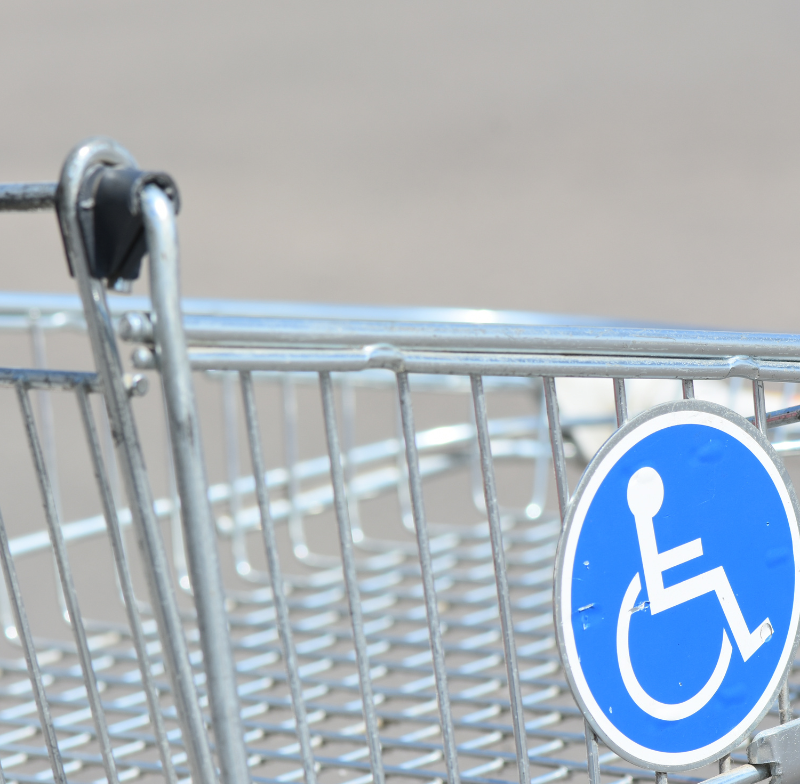
Not just a little wheelchair symbol on a website.
Actual information.
How many accessible parking spaces are there?
Where are they?
How far are they from the entrance?
Are there steps?
What is the surface like?
Is there seating?
Are there accessible toilets?
Are all areas accessible?
Are there steep slopes?
Is assistance available?
Even information about things that might seem insignificant can make a huge difference.
Knowing what to expect can turn anxiety into confidence.
You might still decide that somewhere isn’t suitable for you, but at least you can make that decision before travelling there.
And that is incredibly important.
Accessibility doesn’t have to mean perfection
No venue is going to be perfect.
Buildings are old. Historic attractions have limitations. Some locations simply cannot be made completely accessible without significant changes.
But there is a big difference between something being imperfectly accessible and a venue not being honest about its limitations.
If a historic building has three steps at the entrance, tell people.
If there is an alternative entrance, explain where it is.
If part of an attraction cannot be reached by wheelchair, say so.
If the accessible parking is some distance away, provide that information.
Honest information allows people to plan.
And planning gives people choice.
Going somewhere new should be exciting
There is nothing wrong with taking precautions.
There is nothing wrong with researching somewhere before you visit.
In fact, for many disabled people, good planning is what makes a day out possible.
But accessibility shouldn’t have to feel like detective work.
Going somewhere new should be about anticipation rather than anxiety.
It should be about wondering what you’ll see, who you’ll meet and what memories you’ll make.
Not wondering whether you’ll be able to get through the door.
Perhaps that’s what good accessibility really means.
Not simply making it technically possible for a disabled person to enter a building, but making them feel confident enough to want to come in the first place.
Because everyone deserves the chance to discover somewhere new without wondering whether accessibility will turn the adventure into a problem.
Discover more from The Blue Badge Blog
Subscribe to get the latest posts sent to your email.

Leave a Reply